|

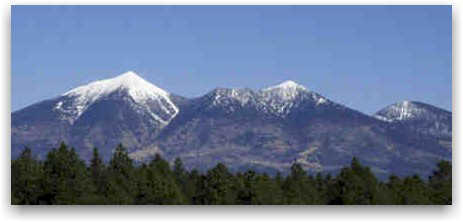
Flagstaff, Arizona sits at the base of the San Francisco Peaks pictured above.
Just South of Flagstaff is a region of small communities and ranches nestled in the Coconino National Forest. We call it home.
We're in Arizona's cool mountain "high country" at 7000 feet elevation. We share the region with lakes, streams, campgrounds, and abundant wildlife in the largest stand of Ponderosa Pine trees on the planet.
This website serves the area with local news and lifestyle comments... and also serves those visiting the area with helpful information.
While I'm at it, I'll try to give you a link to my favorite source when discussing a subject.
Communities in the South of Flagstaff area include:
We chose the area because it offers natural beauty, a relaxed life style, and great neighbors.
Visitors may choose from many facilities for short visits and extended stays... from resort hotels to backwoods camping.
Golf, biking, hiking, camping, fishing, hunting, sight seeing, and skiing are just some of the favorite activities available in season.
Use the navigation buttons on this page to access our one hundred plus pages of information and resource listings.
The first several buttons access pages containing news and information of interest primarily to local and summer residents.
Other pages are targeted to actual and potential visitors... that is, people all over the world. Our communities host visitors from many countries because we are situated between the world-class destinations of the Grand Canyon and Sedona.
The Real Estate pages attract both visitors and residents.
Some pages, such as News
Releases are updated daily as needed.
South of Flagstaff residents and visitors are using this website more and more each month. Please put this website in your favorites list and check with us often.
Fred Doyle
E-mail me at South of Flagstaff through the Contact Us Page.
|
is Cool